How to Hire an HVAC Installer Who Stays

Meghan Ritchie
Meghan Ritchie
Meghan Ritchie
Owner of Trustal Recruiting
Owner of Trustal Recruiting
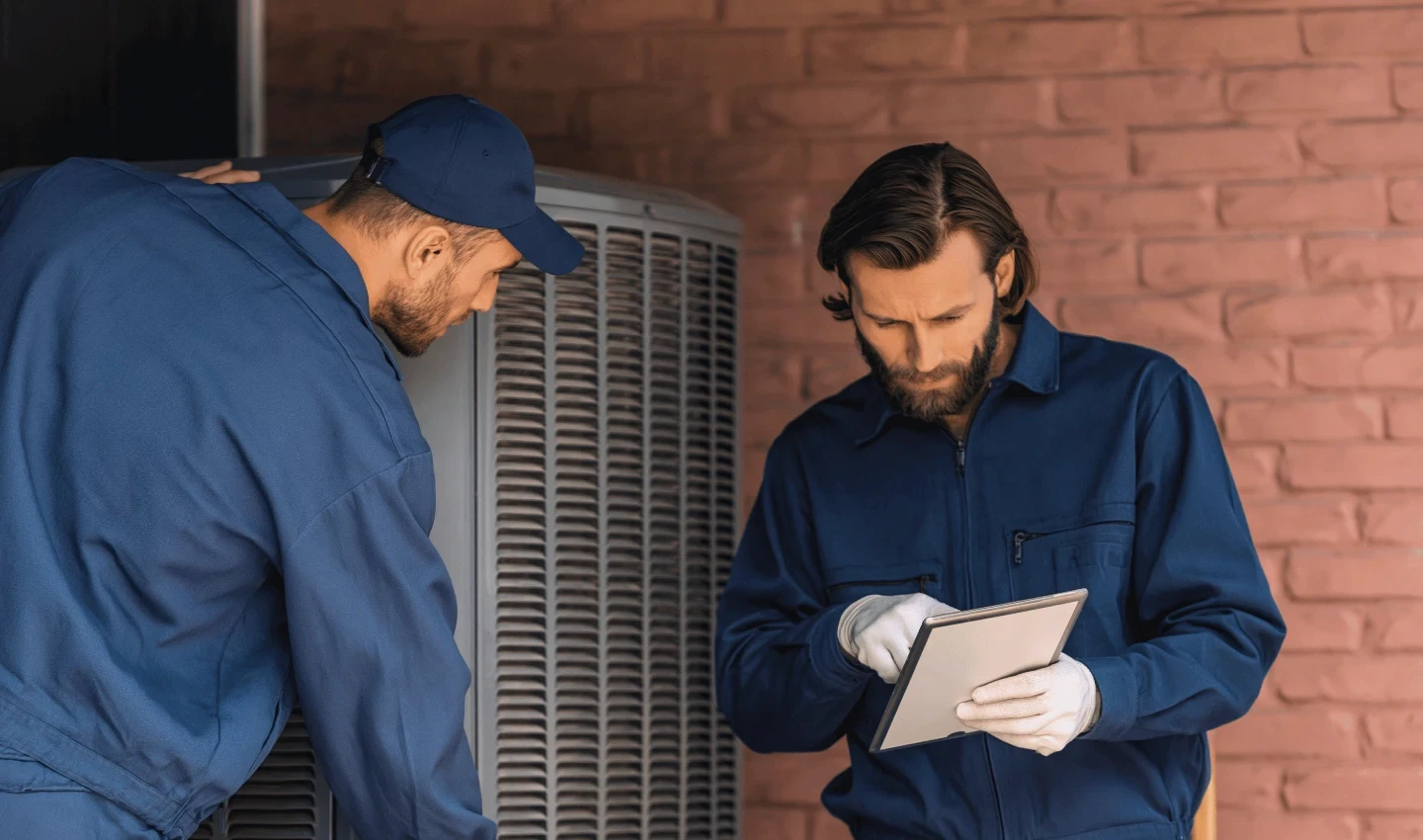
The HVAC installer who stays isn't the one with the longest résumé. It's the one who's stayed before, a few years at each company, and who likes training a helper into a lead instead of working solo. Get those two instincts right, on top of the licensing your state already requires, and you stop replacing the same seat every season.
Filling this role is one of the hardest jobs in the trades right now, and a rushed hire costs you more than an open seat ever will.
Why is it so hard to hire an HVAC installer right now?
Because demand is high and supply is shrinking. The U.S. Bureau of Labor Statistics projects about 40,100 openings a year for heating, air conditioning, and refrigeration mechanics and installers over the decade, with employment growing 8% from 2024 to 2034 — faster than the average for all occupations. Many of those openings exist to replace people leaving the field, and more than half the skilled-trades workforce is now over 50.
So the math is simple and unforgiving. Experienced installers are retiring faster than younger ones are coming up. Residential HVAC installers are rarer still, because many skilled hands prefer commercial work. This role lands near the top of our list of the trickiest, most challenging positions to fill — which is exactly why you can’t treat it like an easy one.
What are the three things to look for in an HVAC installer candidate?
Look past “hard worker.” The traits that separate a good hire from a mediocre one are specific:
Longevity at each stop. Someone who’s stayed a few years at a time at the companies they’ve worked for. Tenure is the clearest signal you’ll get that a person builds something where they land instead of moving on.
The right credentials for your state. HVAC licensing and credentials vary by state, so confirm the candidate holds what your state actually requires. At Trustal, we ask every candidate about the licensing your role calls for as part of screening.
A willingness to work with a helper and train them up. The best installers like having a helper alongside them and coaching that person toward becoming a lead. With the shortage of installers in this country, that instinct isn’t a nice-to-have — it’s how you grow your own bench instead of fighting over the same shrinking pool.
That third one is easy to overlook and impossible to overstate. An installer who builds people multiplies. An installer who only builds units stays a single seat forever.
What are the red flags when hiring an HVAC installer?
Three patterns disqualify a candidate, and we’ve learned each the hard way:
The job hopper. A new company every year tells you how the next year ends.
The lone wolf. Someone who wants to work alone — or who only wants a helper there to fetch and follow orders, not to be trained up. That’s the opposite of the bench-building installer you want.
Anyone who can’t clear the basics for the job. This work puts people in a company vehicle and inside customers’ homes, so a candidate has to pass a background check and be able to drive for the role. These aren’t negotiable, because your reputation rides in the truck with them.
What’s the single biggest mistake owners make hiring this role?
Hiring in a rush. There isn’t one magic misstep — it’s the pressure to fill the seat now, before you’ve found the right person, that does the damage.
Give yourself the time to look. The right hire usually has years of residential installation experience, is willing to work with a helper and train that apprentice into a lead, and is detail-oriented enough to care — tremendously — about doing the installation correctly. None of that shows up when you’re hiring under a clock. This is the role where slow to hire, quick to fire earns its keep.
How much does an HVAC installer make?
Pay depends heavily on your market, whether the work is pure installation or a service-install hybrid, and how much overtime your busy season carries. Here’s what current market data shows for HVAC installers, so you can set expectations that hold up in the interview:
Market | Typical installer pay (market data) |
|---|---|
National | Around $24–$29 an hour for installers; roughly $50K–$60K a year, more with steady overtime. |
Atlanta, GA | About $28–$29 an hour on average; the broader band runs from the high teens for entry installers to $30+ for experienced ones, plus $6K–$9K in annual overtime for top earners. |
Dallas–Fort Worth, TX | Around $28–$29 an hour for installers — the strongest HVAC market in Texas, lifted by steady construction demand. |
Phoenix, AZ | About $26–$27 an hour for installers, with heavy cooling-season overtime. |
These are market averages from public salary data, not Trustal placement figures. Use them as a starting point, then adjust for the candidate’s experience and your local competition.
One word of caution: don’t promise pay or a schedule you can’t honor. If you say “no weekends” and then schedule every Saturday during peak season, a good installer walks. Preview the busy months and the overtime up front. Honesty in the interview is the cheapest retention tool you have.
What’s the first interview question to ask an HVAC installer?
Ask: “What has you in the market for a new position?” We ask it of nearly every candidate, regardless of role, because the answer tells you what they’re moving toward — not just what they’re running from.
A good answer sounds like: “I’m looking for a company where I can bring my skills and my desire to help others grow. Somewhere that incentivizes people to do well and recognizes great work. Where I am now isn’t a place I can see myself long-term — the owners aren’t focused on growing the company or their people.” That’s someone who cares about the company’s growth, their own growth, and the growth of the team around them. In a business that’s scaling, that person is an addition, not just a hire.
A bad answer sounds like: “I don’t like my boss. I don’t get paid enough.” It’s all grievance and no direction. Someone who wants to work for themselves, with their own interests first, and who shrugs at the work environment isn’t going to be a productive, positive part of a growing organization — no matter how clean their installs are.
So we drill on this. The trade skills get someone in the door; the attitude toward growth is what keeps them — and your culture — intact.
How do you find an HVAC installer who fits and stays?
You stay in the market, and you screen for fit before skill. The conventional wisdom says start hiring when you have an opening. The better move is to always be looking, because this is a role you can’t fill on demand. High demand, low supply, a wave of retirements — by the time you’re desperate, you’re choosing from whoever’s left.
That’s the work we do at Trustal Recruiting. We recruit exclusively in the trades — HVAC is one of twelve verticals we serve — and we connect dependable companies with dependable people who fit your culture, match your standards, and stay. We handle the outreach, the resume reviews, the scheduling, and the first interviews, so only intentional, vetted candidates reach your desk. Most roles are filled in weeks, not months — without the stress, wasted time, or guesswork of doing it alone.
We’re not a staffing agency, and we don’t do generic placement. We’re your partners in growth. We’ve lived this work, and we know what a single bad install hire costs an owner who’s trying to scale.
What licenses and certifications should an HVAC installer have?
It depends on your state — but a few things are close to universal. Use this as your checklist, then confirm the specifics your state and municipality require:
EPA Section 608 certification. Federally required for anyone who handles refrigerants. For an installer, treat this as non-negotiable.
State or local HVAC license. Requirements vary widely by state — some license at the state level, some at the city or county level, and a few barely at all. Know what yours calls for before you interview.
NATE certification (a plus, not a must). North American Technician Excellence is voluntary, but it’s a clean signal that a candidate has invested in proving their skill.
Here’s the honest part: credentials are something you, the owner, need to confirm for your market — don’t assume. At Trustal, we ask every candidate about the licensing and certifications your role requires as part of screening, so the conversation starts in the right place. Confirming them against your state’s rules is the step that protects your business and the homeowners your team serves.
Ready to Hire with Confidence?
If you’re tired of replacing the same seat every season, let’s find you someone who fits and stays. Request an Appointment — we’ll review your inquiry and reply ASAP, usually within 24 hours.
Meghan Ritchie is the founder of Trustal Recruiting. She spent 20+ years in home services — in marketing and general-manager roles at leading Atlanta companies — before founding Trustal in November 2025, after watching good companies stall because they couldn’t find good people. Trustal recruits exclusively in the trades, connecting small and mid-sized businesses with trustworthy, high-quality talent.
Related: HVAC recruiters
Meghan Ritchie is the founder of Trustal Recruiting and brings more than 20 years of leadership experience inside home service companies — the same HVAC, plumbing, electrical, and roofing businesses Trustal serves today. She has lived the pace and pressure of the trades from the inside, which means she understands what actually makes a hire work: not just a resume that checks boxes, but a person who fits the culture, shows up right in a customer's home, and stays.
She built Trustal to give growing home service owners a recruiting partner who thinks like an operator, not a staffing vendor — someone who sells your company like it's her own, vets every candidate by hand, and protects the culture you've worked to build. That insider perspective is what makes Trustal's hiring guidance trusted by owners across the country.
Browse Hiring Resources By Industry
We recruit exclusively for the home services industry. From HVAC and plumbing to electrical, roofing, and the trades that work alongside them, we know what each industry needs and how to find people who fit it.
Plumbing
Find experienced plumbers, apprentices, and operations personnel who understand the demands of the plumbing trade.
Read More
Read More

Roofing
Build a dependable roofing workforce with skilled installers and field leaders you can trust.
Read More
Read More

Electrical
Source electricians - whether journeymen or apprentices - as well as office staff and service managers as you need them.
Read More
Read More

HVAC
Find experienced HVAC technicians, installers, and operations personnel who understand the demands of the trade.
Read More
Read More

Construction
Find dependable laborers, carpenters, operators, and the foremen and superintendents who run your jobsites.
Read More
Read More

Solar
Find solar installers, electricians, and crew leads who can move fast on residential and commercial projects without cutting corners.
Read More
Read More
How to Hire an HVAC Installer Who Stays
Meghan Ritchie
Owner of Trustal Recruiting
The HVAC installer who stays isn't the one with the longest résumé. It's the one who's stayed before, a few years at each company, and who likes training a helper into a lead instead of working solo. Get those two instincts right, on top of the licensing your state already requires, and you stop replacing the same seat every season.
Filling this role is one of the hardest jobs in the trades right now, and a rushed hire costs you more than an open seat ever will.
Why is it so hard to hire an HVAC installer right now?
Because demand is high and supply is shrinking. The U.S. Bureau of Labor Statistics projects about 40,100 openings a year for heating, air conditioning, and refrigeration mechanics and installers over the decade, with employment growing 8% from 2024 to 2034 — faster than the average for all occupations. Many of those openings exist to replace people leaving the field, and more than half the skilled-trades workforce is now over 50.
So the math is simple and unforgiving. Experienced installers are retiring faster than younger ones are coming up. Residential HVAC installers are rarer still, because many skilled hands prefer commercial work. This role lands near the top of our list of the trickiest, most challenging positions to fill — which is exactly why you can’t treat it like an easy one.
What are the three things to look for in an HVAC installer candidate?
Look past “hard worker.” The traits that separate a good hire from a mediocre one are specific:
Longevity at each stop. Someone who’s stayed a few years at a time at the companies they’ve worked for. Tenure is the clearest signal you’ll get that a person builds something where they land instead of moving on.
The right credentials for your state. HVAC licensing and credentials vary by state, so confirm the candidate holds what your state actually requires. At Trustal, we ask every candidate about the licensing your role calls for as part of screening.
A willingness to work with a helper and train them up. The best installers like having a helper alongside them and coaching that person toward becoming a lead. With the shortage of installers in this country, that instinct isn’t a nice-to-have — it’s how you grow your own bench instead of fighting over the same shrinking pool.
That third one is easy to overlook and impossible to overstate. An installer who builds people multiplies. An installer who only builds units stays a single seat forever.
What are the red flags when hiring an HVAC installer?
Three patterns disqualify a candidate, and we’ve learned each the hard way:
The job hopper. A new company every year tells you how the next year ends.
The lone wolf. Someone who wants to work alone — or who only wants a helper there to fetch and follow orders, not to be trained up. That’s the opposite of the bench-building installer you want.
Anyone who can’t clear the basics for the job. This work puts people in a company vehicle and inside customers’ homes, so a candidate has to pass a background check and be able to drive for the role. These aren’t negotiable, because your reputation rides in the truck with them.
What’s the single biggest mistake owners make hiring this role?
Hiring in a rush. There isn’t one magic misstep — it’s the pressure to fill the seat now, before you’ve found the right person, that does the damage.
Give yourself the time to look. The right hire usually has years of residential installation experience, is willing to work with a helper and train that apprentice into a lead, and is detail-oriented enough to care — tremendously — about doing the installation correctly. None of that shows up when you’re hiring under a clock. This is the role where slow to hire, quick to fire earns its keep.
How much does an HVAC installer make?
Pay depends heavily on your market, whether the work is pure installation or a service-install hybrid, and how much overtime your busy season carries. Here’s what current market data shows for HVAC installers, so you can set expectations that hold up in the interview:
Market | Typical installer pay (market data) |
|---|---|
National | Around $24–$29 an hour for installers; roughly $50K–$60K a year, more with steady overtime. |
Atlanta, GA | About $28–$29 an hour on average; the broader band runs from the high teens for entry installers to $30+ for experienced ones, plus $6K–$9K in annual overtime for top earners. |
Dallas–Fort Worth, TX | Around $28–$29 an hour for installers — the strongest HVAC market in Texas, lifted by steady construction demand. |
Phoenix, AZ | About $26–$27 an hour for installers, with heavy cooling-season overtime. |
These are market averages from public salary data, not Trustal placement figures. Use them as a starting point, then adjust for the candidate’s experience and your local competition.
One word of caution: don’t promise pay or a schedule you can’t honor. If you say “no weekends” and then schedule every Saturday during peak season, a good installer walks. Preview the busy months and the overtime up front. Honesty in the interview is the cheapest retention tool you have.
What’s the first interview question to ask an HVAC installer?
Ask: “What has you in the market for a new position?” We ask it of nearly every candidate, regardless of role, because the answer tells you what they’re moving toward — not just what they’re running from.
A good answer sounds like: “I’m looking for a company where I can bring my skills and my desire to help others grow. Somewhere that incentivizes people to do well and recognizes great work. Where I am now isn’t a place I can see myself long-term — the owners aren’t focused on growing the company or their people.” That’s someone who cares about the company’s growth, their own growth, and the growth of the team around them. In a business that’s scaling, that person is an addition, not just a hire.
A bad answer sounds like: “I don’t like my boss. I don’t get paid enough.” It’s all grievance and no direction. Someone who wants to work for themselves, with their own interests first, and who shrugs at the work environment isn’t going to be a productive, positive part of a growing organization — no matter how clean their installs are.
So we drill on this. The trade skills get someone in the door; the attitude toward growth is what keeps them — and your culture — intact.
How do you find an HVAC installer who fits and stays?
You stay in the market, and you screen for fit before skill. The conventional wisdom says start hiring when you have an opening. The better move is to always be looking, because this is a role you can’t fill on demand. High demand, low supply, a wave of retirements — by the time you’re desperate, you’re choosing from whoever’s left.
That’s the work we do at Trustal Recruiting. We recruit exclusively in the trades — HVAC is one of twelve verticals we serve — and we connect dependable companies with dependable people who fit your culture, match your standards, and stay. We handle the outreach, the resume reviews, the scheduling, and the first interviews, so only intentional, vetted candidates reach your desk. Most roles are filled in weeks, not months — without the stress, wasted time, or guesswork of doing it alone.
We’re not a staffing agency, and we don’t do generic placement. We’re your partners in growth. We’ve lived this work, and we know what a single bad install hire costs an owner who’s trying to scale.
What licenses and certifications should an HVAC installer have?
It depends on your state — but a few things are close to universal. Use this as your checklist, then confirm the specifics your state and municipality require:
EPA Section 608 certification. Federally required for anyone who handles refrigerants. For an installer, treat this as non-negotiable.
State or local HVAC license. Requirements vary widely by state — some license at the state level, some at the city or county level, and a few barely at all. Know what yours calls for before you interview.
NATE certification (a plus, not a must). North American Technician Excellence is voluntary, but it’s a clean signal that a candidate has invested in proving their skill.
Here’s the honest part: credentials are something you, the owner, need to confirm for your market — don’t assume. At Trustal, we ask every candidate about the licensing and certifications your role requires as part of screening, so the conversation starts in the right place. Confirming them against your state’s rules is the step that protects your business and the homeowners your team serves.
Ready to Hire with Confidence?
If you’re tired of replacing the same seat every season, let’s find you someone who fits and stays. Request an Appointment — we’ll review your inquiry and reply ASAP, usually within 24 hours.
Meghan Ritchie is the founder of Trustal Recruiting. She spent 20+ years in home services — in marketing and general-manager roles at leading Atlanta companies — before founding Trustal in November 2025, after watching good companies stall because they couldn’t find good people. Trustal recruits exclusively in the trades, connecting small and mid-sized businesses with trustworthy, high-quality talent.
Related: HVAC recruiters
Meghan Ritchie is the founder of Trustal Recruiting and brings more than 20 years of leadership experience inside home service companies — the same HVAC, plumbing, electrical, and roofing businesses Trustal serves today. She has lived the pace and pressure of the trades from the inside, which means she understands what actually makes a hire work: not just a resume that checks boxes, but a person who fits the culture, shows up right in a customer's home, and stays.
She built Trustal to give growing home service owners a recruiting partner who thinks like an operator, not a staffing vendor — someone who sells your company like it's her own, vets every candidate by hand, and protects the culture you've worked to build. That insider perspective is what makes Trustal's hiring guidance trusted by owners across the country.
Browse Hiring Resources By Industry
We recruit exclusively for the home services industry. From HVAC and plumbing to electrical, roofing, and the trades that work alongside them, we know what each industry needs and how to find people who fit it.
Plumbing
Find experienced plumbers, apprentices, and operations personnel who understand the demands of the plumbing trade.
Read More
Read More
Roofing
Build a dependable roofing workforce with skilled installers and field leaders you can trust.
Read More
Read More
Electrical
Source electricians - whether journeymen or apprentices - as well as office staff and service managers as you need them.
Read More
Read More
HVAC
Find experienced HVAC technicians, installers, and operations personnel who understand the demands of the trade.
Read More
Read More
Construction
Find dependable laborers, carpenters, operators, and the foremen and superintendents who run your jobsites.
Read More
Read More
Solar
Find solar installers, electricians, and crew leads who can move fast on residential and commercial projects without cutting corners.
Read More
Read More
Our Networks & Memberships





Ready to Hire with Confidence?
Ready to Hire with Confidence?
Ready to Hire with Confidence?
Flat rate direct hire for trades recruiting. One flat rate covers every person you bring on, with no charge per placement.
(678) 921-9899
Meghan@TrustalRecruiting.com