How to Hire Plumbers: A Service Plumber Hiring Guide for Home Service Owners

Meghan Ritchie
Meghan Ritchie
Meghan Ritchie
Owner of Trustal Recruiting
Owner of Trustal Recruiting

To hire a service plumber, define the role, start your search with plumbers at competing shops, screen for fit as hard as you screen for skill, and begin looking before you have an open truck. A search can close in two weeks or take months. Your market, your state's license rules, and your pay and benefits decide which one you get.
What does a service plumber do?
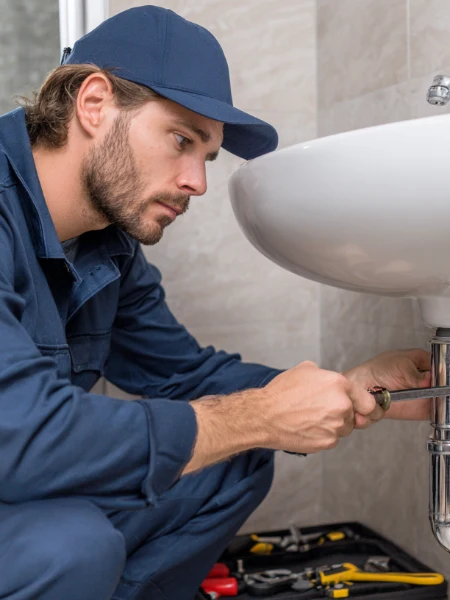
A service plumber goes into a customer’s home, checks the problem, troubleshoots it, presents options, and completes the repair or installation. The work covers pipes, faucets, toilets, clogs, and more.
The role needs technical skill and soft skill. The plumber explains the options in plain terms, documents the work, and invoices the job. A good one treats every home like it belongs to someone they know and love.
How long does it take to hire a service plumber?
It takes anywhere from two weeks to several months. I have placed plumbers within two weeks. Other searches have run for months.
Three things decide the pace:
Your market. Supply and demand for plumbers in your area at the time of the search set the pace.
Your state’s license rules. A license requirement shrinks the pool of candidates who can work alone in a customer’s home.
Your compensation and benefits. A clear, strong package draws more applicants and moves the search along.
The national picture adds pressure. The U.S. Bureau of Labor Statistics (BLS) projects about 42,000 plumber, pipefitter, and steamfitter openings each year from 2025 to 2035 and 7% job growth. A study that LIXIL commissioned projects about 550,000 unfilled plumbing positions by 2027. LIXIL paid for that study, so weigh it with that in mind.
Where do the best service plumber hires come from?
The best residential plumbers I see come from competing shops. They already know how to work a customer-focused process. They know how to give homeowners options and let them choose what fits. They know how to use an iPad and a CRM to document the work, show solutions, and invoice.
Other backgrounds can work. I have seen an HVAC client hire a technician with less technical experience because he was a tremendous fit: friendly, service-minded, coachable, and hungry to build a career. The client trained him up and licensed him. It took longer than hiring a veteran, and it worked. The same approach fits plumbing if you have the time and the training plan.
What license does a service plumber need?
Most states and some localities require a plumber to hold a license. BLS reports that the path takes 2 to 5 years of experience and a passing exam score. Most plumbers learn the trade through a 4 or 5 year apprenticeship with about 2,000 paid hours a year.
State rules differ. We ask every candidate about their license. You should confirm the license with your state licensing board before you make an offer.
How much should you pay a service plumber?
Start with the national numbers and price against your own market. BLS reports a May 2025 median of $63,800 a year ($30.67 an hour). The lowest-paid 10% earn less than $44,150. The top 10% earn more than $108,420.
Your number depends on your market, and the way you present it matters as much as the figure:
Publish the pay. Top candidates skip postings that say “Competitive Pay Based on Experience.” If the role pays commission and bonus with no base, list the annual all-in figure, called on-target earnings (OTE).
Offer a health insurance stipend if you cannot offer a plan. Supplemental dental, vision, and life coverage cost little and draw more qualified applicants.
Call it a hiring bonus. A signing bonus implies day-one payment. Pay a hiring bonus in thirds at 90 days, 6 months, and 12 months. The employee stays to earn it. A $3,000 bonus works well.
Pay for licensing. If a candidate has the hours documented and is ready to sit for the exam, cover a week of study time and the testing fees. It shows you invest in your team.
Show a growth path with a timeline. Candidates respond to a clear map of what they can earn and when.
If your pay sits below market, do not justify it and do not hire whoever accepts it. That hire disappoints you, you let the hire go or the hire quits, and you repeat the cycle. For more levers, read our guide to building a compelling offer without the biggest salary.
How is hiring a service plumber different from hiring an HVAC tech or an electrician?
It is not much different. The technical skills change, because the plumber works with pipes, faucets, toilets, and clogs. The process stays the same. The technician checks the customer’s home, troubleshoots, presents options or solutions, and completes the service or installation.
Every one of these trades needs both technical skill and soft skill, and every hire needs to fit your company’s culture. See our sibling guides to hiring an HVAC technician and hiring a journeyman electrician.
What should you look for in a service plumber candidate?
Look for three things.
A license, where your state requires one. The plumber needs it to work alone in someone’s home or on their property.
A love of serving others. The candidate builds rapport, asks questions, and explains things in basic, easy-to-understand terms. The candidate presents options to homeowners so that well-informed customers make the best decision for themselves.
A coachable attitude. The candidate learns, plays on the team when needed, and coaches others to uphold the company’s reputation for doing right by people.
Plumbing is a special kind of technician work. The job can run toxic and stinky, and that makes people cranky. A plumber who walks into a home needs to be positive, friendly, and outgoing, and needs to care while keeping a light touch.
What are the red flags when you hire a plumber?
Watch for three.
Job hopping. Skip the candidate who leaves a job within a year, several years in a row.
An arrogant, know-it-all manner. That candidate resists coaching.
A dislike of dealing with people. This candidate wants to do the work and skip the customer. That plumber belongs on the commercial or industrial side of the trade.
What should you ask in the first plumber interview?
Ask this: “What has you in the market looking for another job?”
A strong answer sounds like this: “I love what I do. I work in a culture where I do not feel the technicians get treated well, or I see no chance to grow or mentor others. I want a long-term work home where I can build my career.”
A weak answer blames the boss (“My boss is a jerk”) or centers on money and total autonomy (“I want to do what I want and make what I want”). Any hint of drama calls for a deeper question. If the candidate sits at the root of the drama or blames everyone else, steer clear.
What is the biggest mistake owners make when they hire a plumber?
Owners rush to fill a seat. They hire the first person who can do the work, and they skip the second question: does this person fit our culture and bring the soft skills the job needs?
There is no magic bullet. You have two good paths. Hire for culture fit and attitude, and train the person up. Or hire an experienced plumber with a proven track record, and confirm that record by talking with references. Both paths take patience. We say it this way: slow to hire, quick to fire.
Keep looking for plumbers while your trucks stay full. Plan to need someone next week. A search that starts when the truck sits empty pushes owners into the wrong fit.
How do you keep a service plumber after you hire one?
Plan the first 90 days before the hire starts. ServiceTitan reports 18% technician turnover for plumbing and an average tenure of 3.96 years (June 2026, ServiceTitan customers only). Those numbers show how much a plumber’s first stretch with you matters.
Read how your first 90 days set techs up to stay for 5 years, our 30/60/90 onboarding guide, and why employees leave home service companies.
Can a recruiter help you hire a plumber?
Yes. Trustal Recruiting is a recruiting firm for the trades, including plumbing. We write job listings that stand out, reach out to candidates in the field, and pre-screen for you with resume reviews, scheduling, and first interviews. We introduce candidates to you one at a time. We charge One Flat Fee. Read how recruiting fees work for home service businesses.
Erin B. at Anytime Heating, Cooling & Plumbing says of our team: “Detail-oriented, bring great energy… the quality of candidates they deliver.” Read the Anytime Heating, Cooling & Plumbing case study.
Ready to Hire with Confidence?
Hiring a service plumber takes a clear role, a published offer, a fit-first interview, and a search that starts before you need the seat. If you want a partner for the search, see our plumbing recruiting page and request an appointment. We reply ASAP, with a target of 24 hours.
About the author. Meghan Ritchie founded Trustal Recruiting in November 2025. She spent 20+ years in home services, with Marketing Director and General Manager roles at Atlanta home services companies including SuperiorPro, Reliable Heating & Air, and Mr. Rooter & Mr. Electric of Atlanta. She believes people make the difference.
Meghan Ritchie is the founder of Trustal Recruiting and brings more than 20 years of leadership experience inside home service companies — the same HVAC, plumbing, electrical, and roofing businesses Trustal serves today. She has lived the pace and pressure of the trades from the inside, which means she understands what actually makes a hire work: not just a resume that checks boxes, but a person who fits the culture, shows up right in a customer's home, and stays.
She built Trustal to give growing home service owners a recruiting partner who thinks like an operator, not a staffing vendor — someone who sells your company like it's her own, vets every candidate by hand, and protects the culture you've worked to build. That insider perspective is what makes Trustal's hiring guidance trusted by owners across the country.
Browse Hiring Resources By Industry
We recruit exclusively for the home services industry. From HVAC and plumbing to electrical, roofing, and the trades that work alongside them, we know what each industry needs and how to find people who fit it.
Plumbing
Find experienced plumbers, apprentices, and operations personnel who understand the demands of the plumbing trade.
Read More
Read More

Roofing
Build a dependable roofing workforce with skilled installers and field leaders you can trust.
Read More
Read More

Electrical
Source electricians - whether journeymen or apprentices - as well as office staff and service managers as you need them.
Read More
Read More

HVAC
Find experienced HVAC technicians, installers, and operations personnel who understand the demands of the trade.
Read More
Read More

Construction
Find dependable laborers, carpenters, operators, and the foremen and superintendents who run your jobsites.
Read More
Read More

Solar
Find solar installers, electricians, and crew leads who can move fast on residential and commercial projects without cutting corners.
Read More
Read More
How to Hire Plumbers: A Service Plumber Hiring Guide for Home Service Owners
Meghan Ritchie
Owner of Trustal Recruiting
To hire a service plumber, define the role, start your search with plumbers at competing shops, screen for fit as hard as you screen for skill, and begin looking before you have an open truck. A search can close in two weeks or take months. Your market, your state's license rules, and your pay and benefits decide which one you get.
What does a service plumber do?
A service plumber goes into a customer’s home, checks the problem, troubleshoots it, presents options, and completes the repair or installation. The work covers pipes, faucets, toilets, clogs, and more.
The role needs technical skill and soft skill. The plumber explains the options in plain terms, documents the work, and invoices the job. A good one treats every home like it belongs to someone they know and love.
How long does it take to hire a service plumber?
It takes anywhere from two weeks to several months. I have placed plumbers within two weeks. Other searches have run for months.
Three things decide the pace:
Your market. Supply and demand for plumbers in your area at the time of the search set the pace.
Your state’s license rules. A license requirement shrinks the pool of candidates who can work alone in a customer’s home.
Your compensation and benefits. A clear, strong package draws more applicants and moves the search along.
The national picture adds pressure. The U.S. Bureau of Labor Statistics (BLS) projects about 42,000 plumber, pipefitter, and steamfitter openings each year from 2025 to 2035 and 7% job growth. A study that LIXIL commissioned projects about 550,000 unfilled plumbing positions by 2027. LIXIL paid for that study, so weigh it with that in mind.
Where do the best service plumber hires come from?
The best residential plumbers I see come from competing shops. They already know how to work a customer-focused process. They know how to give homeowners options and let them choose what fits. They know how to use an iPad and a CRM to document the work, show solutions, and invoice.
Other backgrounds can work. I have seen an HVAC client hire a technician with less technical experience because he was a tremendous fit: friendly, service-minded, coachable, and hungry to build a career. The client trained him up and licensed him. It took longer than hiring a veteran, and it worked. The same approach fits plumbing if you have the time and the training plan.
What license does a service plumber need?
Most states and some localities require a plumber to hold a license. BLS reports that the path takes 2 to 5 years of experience and a passing exam score. Most plumbers learn the trade through a 4 or 5 year apprenticeship with about 2,000 paid hours a year.
State rules differ. We ask every candidate about their license. You should confirm the license with your state licensing board before you make an offer.
How much should you pay a service plumber?
Start with the national numbers and price against your own market. BLS reports a May 2025 median of $63,800 a year ($30.67 an hour). The lowest-paid 10% earn less than $44,150. The top 10% earn more than $108,420.
Your number depends on your market, and the way you present it matters as much as the figure:
Publish the pay. Top candidates skip postings that say “Competitive Pay Based on Experience.” If the role pays commission and bonus with no base, list the annual all-in figure, called on-target earnings (OTE).
Offer a health insurance stipend if you cannot offer a plan. Supplemental dental, vision, and life coverage cost little and draw more qualified applicants.
Call it a hiring bonus. A signing bonus implies day-one payment. Pay a hiring bonus in thirds at 90 days, 6 months, and 12 months. The employee stays to earn it. A $3,000 bonus works well.
Pay for licensing. If a candidate has the hours documented and is ready to sit for the exam, cover a week of study time and the testing fees. It shows you invest in your team.
Show a growth path with a timeline. Candidates respond to a clear map of what they can earn and when.
If your pay sits below market, do not justify it and do not hire whoever accepts it. That hire disappoints you, you let the hire go or the hire quits, and you repeat the cycle. For more levers, read our guide to building a compelling offer without the biggest salary.
How is hiring a service plumber different from hiring an HVAC tech or an electrician?
It is not much different. The technical skills change, because the plumber works with pipes, faucets, toilets, and clogs. The process stays the same. The technician checks the customer’s home, troubleshoots, presents options or solutions, and completes the service or installation.
Every one of these trades needs both technical skill and soft skill, and every hire needs to fit your company’s culture. See our sibling guides to hiring an HVAC technician and hiring a journeyman electrician.
What should you look for in a service plumber candidate?
Look for three things.
A license, where your state requires one. The plumber needs it to work alone in someone’s home or on their property.
A love of serving others. The candidate builds rapport, asks questions, and explains things in basic, easy-to-understand terms. The candidate presents options to homeowners so that well-informed customers make the best decision for themselves.
A coachable attitude. The candidate learns, plays on the team when needed, and coaches others to uphold the company’s reputation for doing right by people.
Plumbing is a special kind of technician work. The job can run toxic and stinky, and that makes people cranky. A plumber who walks into a home needs to be positive, friendly, and outgoing, and needs to care while keeping a light touch.
What are the red flags when you hire a plumber?
Watch for three.
Job hopping. Skip the candidate who leaves a job within a year, several years in a row.
An arrogant, know-it-all manner. That candidate resists coaching.
A dislike of dealing with people. This candidate wants to do the work and skip the customer. That plumber belongs on the commercial or industrial side of the trade.
What should you ask in the first plumber interview?
Ask this: “What has you in the market looking for another job?”
A strong answer sounds like this: “I love what I do. I work in a culture where I do not feel the technicians get treated well, or I see no chance to grow or mentor others. I want a long-term work home where I can build my career.”
A weak answer blames the boss (“My boss is a jerk”) or centers on money and total autonomy (“I want to do what I want and make what I want”). Any hint of drama calls for a deeper question. If the candidate sits at the root of the drama or blames everyone else, steer clear.
What is the biggest mistake owners make when they hire a plumber?
Owners rush to fill a seat. They hire the first person who can do the work, and they skip the second question: does this person fit our culture and bring the soft skills the job needs?
There is no magic bullet. You have two good paths. Hire for culture fit and attitude, and train the person up. Or hire an experienced plumber with a proven track record, and confirm that record by talking with references. Both paths take patience. We say it this way: slow to hire, quick to fire.
Keep looking for plumbers while your trucks stay full. Plan to need someone next week. A search that starts when the truck sits empty pushes owners into the wrong fit.
How do you keep a service plumber after you hire one?
Plan the first 90 days before the hire starts. ServiceTitan reports 18% technician turnover for plumbing and an average tenure of 3.96 years (June 2026, ServiceTitan customers only). Those numbers show how much a plumber’s first stretch with you matters.
Read how your first 90 days set techs up to stay for 5 years, our 30/60/90 onboarding guide, and why employees leave home service companies.
Can a recruiter help you hire a plumber?
Yes. Trustal Recruiting is a recruiting firm for the trades, including plumbing. We write job listings that stand out, reach out to candidates in the field, and pre-screen for you with resume reviews, scheduling, and first interviews. We introduce candidates to you one at a time. We charge One Flat Fee. Read how recruiting fees work for home service businesses.
Erin B. at Anytime Heating, Cooling & Plumbing says of our team: “Detail-oriented, bring great energy… the quality of candidates they deliver.” Read the Anytime Heating, Cooling & Plumbing case study.
Ready to Hire with Confidence?
Hiring a service plumber takes a clear role, a published offer, a fit-first interview, and a search that starts before you need the seat. If you want a partner for the search, see our plumbing recruiting page and request an appointment. We reply ASAP, with a target of 24 hours.
About the author. Meghan Ritchie founded Trustal Recruiting in November 2025. She spent 20+ years in home services, with Marketing Director and General Manager roles at Atlanta home services companies including SuperiorPro, Reliable Heating & Air, and Mr. Rooter & Mr. Electric of Atlanta. She believes people make the difference.
Meghan Ritchie is the founder of Trustal Recruiting and brings more than 20 years of leadership experience inside home service companies — the same HVAC, plumbing, electrical, and roofing businesses Trustal serves today. She has lived the pace and pressure of the trades from the inside, which means she understands what actually makes a hire work: not just a resume that checks boxes, but a person who fits the culture, shows up right in a customer's home, and stays.
She built Trustal to give growing home service owners a recruiting partner who thinks like an operator, not a staffing vendor — someone who sells your company like it's her own, vets every candidate by hand, and protects the culture you've worked to build. That insider perspective is what makes Trustal's hiring guidance trusted by owners across the country.
Browse Hiring Resources By Industry
We recruit exclusively for the home services industry. From HVAC and plumbing to electrical, roofing, and the trades that work alongside them, we know what each industry needs and how to find people who fit it.
Plumbing
Find experienced plumbers, apprentices, and operations personnel who understand the demands of the plumbing trade.
Read More
Read More
Roofing
Build a dependable roofing workforce with skilled installers and field leaders you can trust.
Read More
Read More
Electrical
Source electricians - whether journeymen or apprentices - as well as office staff and service managers as you need them.
Read More
Read More
HVAC
Find experienced HVAC technicians, installers, and operations personnel who understand the demands of the trade.
Read More
Read More
Construction
Find dependable laborers, carpenters, operators, and the foremen and superintendents who run your jobsites.
Read More
Read More
Solar
Find solar installers, electricians, and crew leads who can move fast on residential and commercial projects without cutting corners.
Read More
Read More
Our Networks & Memberships





Ready to Hire with Confidence?
Ready to Hire with Confidence?
Ready to Hire with Confidence?
Flat rate direct hire for trades recruiting. One flat rate covers every person you bring on, with no charge per placement.
(678) 921-9899
Meghan@TrustalRecruiting.com